


Customer data systems almost never fail all at once.
There is no alert when a profile update does not make it to marketing. No error when analytics and CRM disagree on a customer’s status. No warning when support is looking at stale information. Things simply stop lining up, and teams learn to work around it.
That quiet failure is what makes customer data so hard to fix.
How teams adapt to broken data without noticing
When data feels unreliable, teams change their behavior. They double-check numbers. They add caveats to dashboards. They ask for confirmation before acting. Over time, this becomes normal.
The organization stops trusting the system and starts trusting people instead. Knowledge lives in Slack threads, meetings, and spreadsheets. The tools are still there, but they are no longer authoritative.
At that point, the cost is not just technical. It is cognitive. Every decision carries extra overhead.
Why this happens in modern stacks
Most customer data stacks are built around copying data from one place to another. Events get ingested. Profiles get replicated. Warehouses fill up. But synchronization is usually an afterthought.
As soon as you have multiple systems updating customer data independently, drift becomes inevitable. Even small delays or missed updates compound over time. Because nothing is visibly broken, the issue goes unnoticed until trust is already gone.
Fixing it later is much harder than preventing it.
Preventing failure instead of reacting to it
Oneprofile is designed to prevent this class of problems entirely.
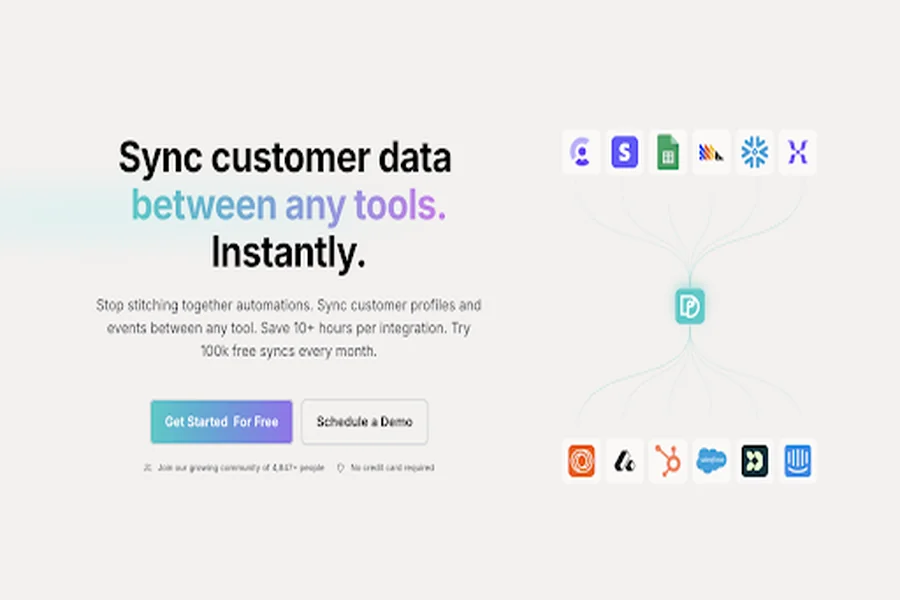
Instead of relying on delayed pipelines and partial replication, Oneprofile keeps customer profiles and events synchronized across tools in real time. When something changes in one system, it is reflected everywhere else automatically.
There is no window where data is “eventually correct.” It is correct as it changes.
This removes the silent failure mode that plagues most customer data setups.
Easy to validate with real usage
Oneprofile includes 100,000 syncs per month for free, which makes it easy to connect real tools and observe how synchronization behaves in practice. You do not have to take it on faith or run a limited proof of concept with fake data.
Pricing scales transparently based on usage and is clearly documented on the pricing page.
Trust is built on consistency
Teams move faster when they trust their data. Conversations get simpler. Decisions feel less risky. That trust comes from consistency, not just from collecting more data.
If you want your customer data systems to stop failing quietly and start behaving reliably, you can get started with Oneprofile athttps://us.getoneprofile.com/register
Once the data stays aligned, the work around it becomes easier too.
