
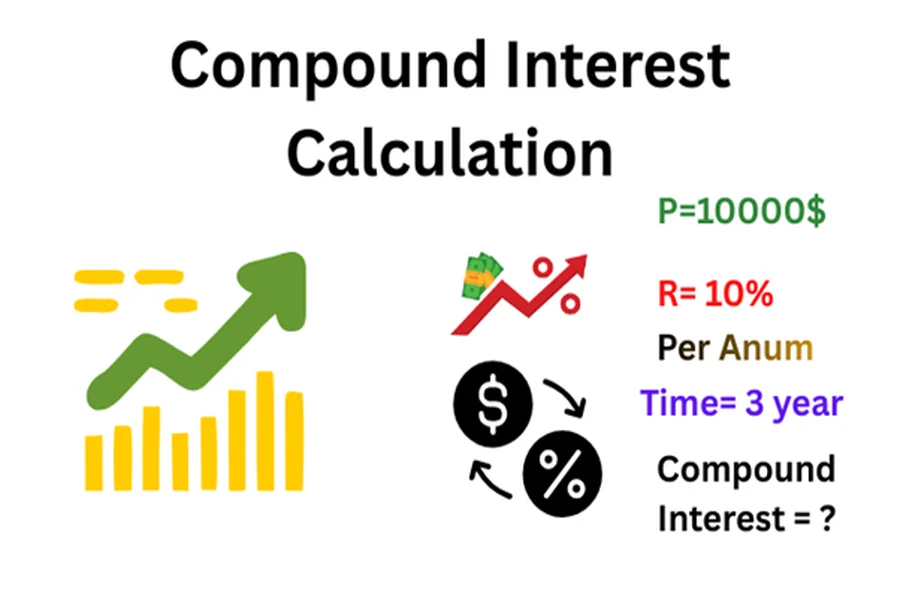
Compound interest is one of the most important concepts in finance because it shows how money grows over time. Unlike simple interest, where interest is calculated only on the original amount, compound interest is calculated on both the principal and the interest accumulated in previous periods. This makes compound interest especially powerful for long-term investments and savings.
To understand this concept clearly, many people rely on online tools such as a compound interest calculation method, which helps estimate future investment value based on principal, interest rate, and time. These tools simplify financial planning and remove the need for complex manual calculations.
Compound interest works by reinvesting earned interest back into the principal. As a result, the amount on which interest is calculated keeps increasing every year. This “interest on interest” effect is the main reason why compound interest generates higher returns compared to simple interest.
What Is Compound Interest?
Compound interest means that interest is added to the principal at regular intervals, and future interest is calculated on this increased amount. Most banks and investment products use compound interest because it reflects real-world growth more accurately than simple interest.
Compound Interest Formula
The standard compound interest formula is:
A = P (1 + r)ᵗ
Where:
A = Final amount
P = Principal amount
r = Annual interest rate (in decimal)
t = Time in years
Detailed Example: $10,000 at 10% for 3 Years
Let’s calculate compound interest step by step.
Given Values
Principal (P) = $10,000
Annual interest rate (r) = 10% = 0.10
Time period (t) = 3 years
Compounding = Annually
Year-wise Calculation
Year 1
Interest = 10% of $10,000
= $1,000
Amount after Year 1
= $10,000 + $1,000
= $11,000
Year 2
Interest = 10% of $11,000
= $1,100
Amount after Year 2
= $11,000 + $1,100
= $12,100
Year 3
Interest = 10% of $12,100
= $1,210
Amount after Year 3
= $12,100 + $1,210
= $13,310
Final Result
Principal: $10,000
Total Interest Earned: $3,310
Final Amount after 3 Years: $13,310
This clearly shows how interest increases every year because it is calculated on the growing amount, not just the original principal.
To avoid manual calculations and instantly compare different scenarios, many users prefer using a compound interest calculation tool, which provides accurate results within seconds.
Why Compound Interest Is Better Than Simple Interest
Interest grows faster each year
Ideal for long-term investments
Rewards early and consistent investing
Widely used in savings accounts, fixed deposits, and investment plans
Real-Life Applications
Compound interest is commonly used in:
Bank savings accounts
Fixed deposits
Mutual funds
Retirement and pension planning
Long-term wealth creation strategies
Understanding compound interest helps individuals make smarter financial decisions and plan for the future more effectively.
Conclusion
Compound interest is a powerful financial concept that can significantly increase wealth over time. As seen in the $10,000 example, even a moderate interest rate of 10% can generate substantial returns when allowed to compound. By starting early and staying invested, anyone can take advantage of compound interest to achieve long-term financial goals.